AMEND news in Author: Jo Grey
-
Buy a Bauble to Support AMEND’s Work

Help ensure that AMEND can keep on doing what it does for future generations by buying a bauble on our festive tree! Just donate, pick a bauble, upload a photo if you want, and leave a message for us or a loved one. It's easy to do and every penny helps. Thank you!
Click here to buy a bauble
-
AMEND Strategy 2027-2030
Earlier this year, the Trustees met with expert Strategic Consultants, Catalyze Consulting, to work through members' feedback and prioritise strategic aims for 2027 to 2030. This is a very important part of the role of the Trustee Board which occurs every 3 years.
Click for more information
-
British Association of Endocrine & Thyroid Surgeons (BAETS) Conference

This was Jo’s last attendance at a BAETS meeting ahead of her imminent retirement. It was lovely to be able to meet with old faces and new in the wonderful venue in Krakow, Poland.
Click here for more
-
AMEND Presents at ENS@T Scientific Meeting
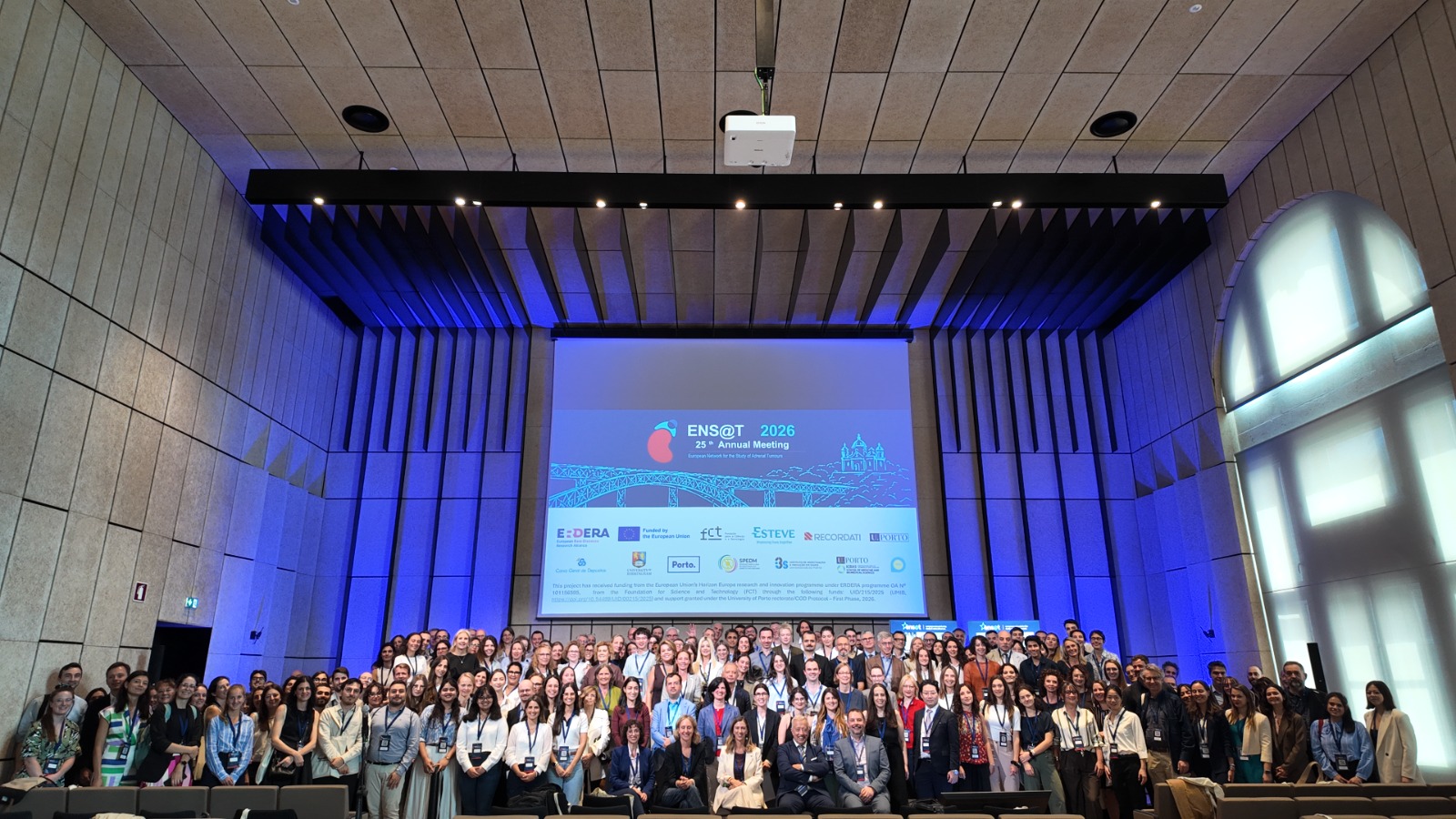
AMEND CEO, Jo Grey, presented 'Patient Experience of Phaeochromocytoma' at the 2026 ENS@T meeting in Porto in October.
Click here for more
-
Somatotrophinoma and primary hyperparathyroidism: a novel MEN1-like syndrome?

Researchers have reported what may be the first known case of a change (variant) in the CHEK2 gene causing a combination of conditions that closely resemble Multiple Endocrine Neoplasia type 1 (MEN1).
Click here to learn more
-
Whole genome and exome sequencing of pNENs to investigate PRRT response
A new study looked at the DNA of pancreatic neuroendocrine tumours (pNETs) to see whether genetic changes could explain why some patients respond better than peptide receptor radionuclide therapy (PRRT) than others.
Click here to learn more
-
Functional imaging in hereditary endocrine neoplasms
This review explains how newer types of scans, known as functional imaging, are improving the care of people with inherited endocrine tumour syndromes such as MEN1, MEN2, von Hippel-Lindau (VHL) disease and hereditary paraganglioma and phaeochromocytoma syndromes.
Click here to learn more
-
Study to Identify Causes of Interference of the Plasma Free Metanephrine Test
This study looked at whether common medicines or long-term health conditions can cause misleading results in blood tests used to detect rare adrenal tumours called pheochromocytomas and paragangliomas.
Click here to read more
-
The Real Story Collaboration

AMEND continues its collaboration within this UK-wide, multi-stakeholder collaboration established to better understand and improve the management of adrenal crisis among people living with adrenal insufficiency, including Addison's disease. Adrenal insufficiency in our communities may be caused by removal of both adrenal glands and renders a patient dependent on steroid replacement medication.
Click here for more information
-
AMEND Represents GenNETS Internationally

From 7-8 September, AMEND CEO, Jo Grey, represented our Genetic Neuroendocrine Tumour Syndrome (GenNETS) patient communities at the annual summit of the International Neuroendocrine Cancer Alliance in Sofia, Bulgaria.
Click here for more information